
Its been a while since I have inhaled a book. And this one was a fresh, deep breath of sea and smoky air.
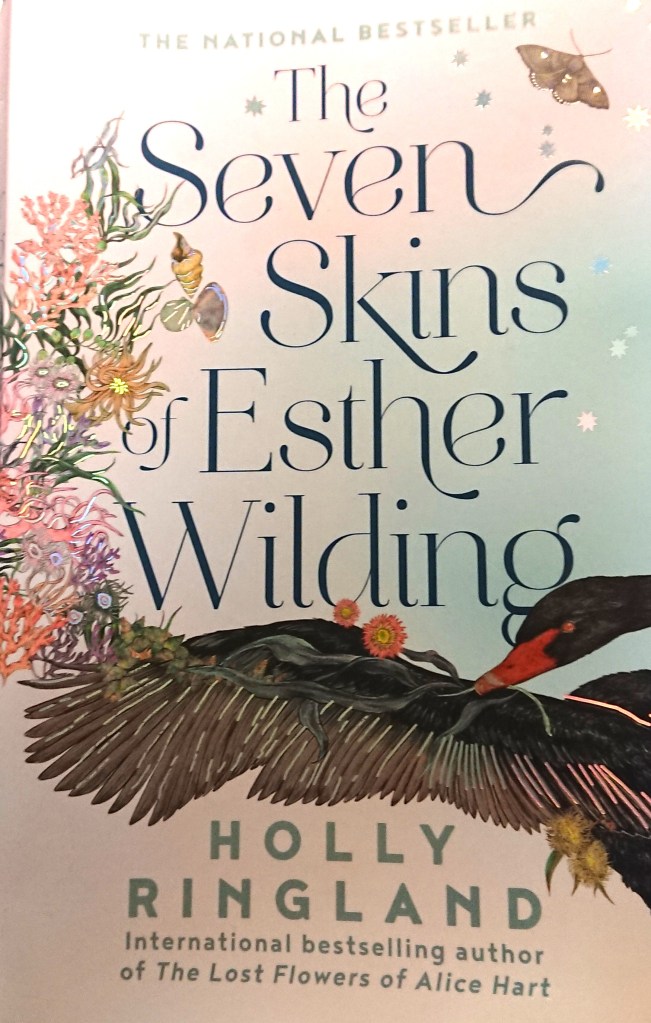
Holly Ringland wrote The Seven Skins of Esther Wilding at the onset of Covid-19. It fascinates me in hindsight, what a surge of creativity was occurring under the surface of stillness and lockdown. A frenzy of discovery, beauty, pain and the need to deep dive into our shared human experience was felt globally – this is one of the pearls that emerged.
Having just finished Stolen Focus, I was reflecting as I read on Johann Hari’s observation about the importance of reading fiction not only to improve and reclaim our focus but also to deepen our sense of compassion, self-awareness and collective understanding of universal themes such as grief, loss and heart break.
I emerged from this book wrapped in a cloak of my own travels, loss and personal journey that was much richer and more comforting than before meeting and merging with these characters. Esther’s self-loathing and destructive tendencies were first felt with the kind of discomfort that forced me to put the book down and inwardly plea to the character – would you pull yourself together?? But as we get to know her in depth – a quite understanding emerges. It reminds me of a documentary I watched recently on Shakespeare by Ethan Hawke ‘Shakespeare Uncovered‘. He interviewed an academic in his preparation to play Macbeth and in the interview the expert observed that Shakespeare did not present his characters to the audience and declare “look upon (and judge) this example of a life gone wrong” (I paraphrase), but rather he presented the varied and many facets of humanity and what we have come to know as ‘failures’ and let us deeply understand that, me too, I could also reach the depths of that despair given the potent cocktail of pain endured by his protagonists. The delicacy and respect with which Ringland treats both Esther and her sister Aura speaks of a wisdom that is the hallmark of a truly wonderful author. This deep respect also came through from Ringland’s research and portrayal of palapa mani, the language of Pakana people of Lutruwita, Tasmania. It was such a pleasure to see these words on the page and shape them in my mind.
This book grappled with that delicate space between tradition, colonisation and the importance of belonging, not only to a place but to a people and ultimately to your Self. It is a timely read and one that I hope heralds the beginning of more nuanced portrayals of Australian history.
This was perhaps the first book I have read where the coming of age time space precisely fit my own and I considered how my contemporaries are now hitting their straps as they hit the sweet spot of mid age, which when lived with a creative lens makes the wrinkles and sags worth the subtle judgement because they are what make truly good stories.
Another echo in the back of my mind as I read this book was a recent episode of The First Inventors which explored kinship systems of the Indigenous Australian nations’ which were a truly remarkable multi-dimensional system established not just to ensure diversity in the genetic pool of their societies but also to create a sustainable balance of resources through deep connectivity with land, animal and plant kingdoms. Ringland managers to weave an understanding of this that moves deeply in culture and beyond it to a universal space, held together through the custodianship and conservation of cultural identity. An absolute must read!

 Miyoga Club